Students (and the rest of us) will encounter challenges and problems throughout our lives. Some of those will be challenges that we overcome in order to learn, grow or reach a new goal — a math problem or a fitness challenge, for example. Some of the challenges come through the everyday ups and downs of life — a rejection, an injury or a loss. Both can stop us in our tracks. Or they can be crucibles in which we learn and grow. What can we do to help students get better at solving problems they encounter? Psychologists and neuroscientists have identified six keys to unlocking problem-solving potential that can help students both in and beyond the classroom:
- Know yourself
- Manage thoughts and feelings
- Break it down
- Think out loud
- Ask others for their opinions
- Encourage yourself
These strategies tap into extensive research on higher-order thinking (which includes executive function and metacognition). Rather than being set in stone, these abilities can be developed through a combination of teaching about how we think and practicing strategies to boost higher-order thinking. This research offers ways to work on both of these approaches. We hope they help your students become more self-reliant and strategic in solving problems they face.
— Kent Pekel, Ed.D.
President and CEO, Search Institute
Asking for help does not mean that we are weak or incompetent. It usually indicates an advanced level of honesty and intelligence. — Anne Wilson Schaef, psychologist and writer
The Problem of Solving Problems
The process of solving problems is a complex, but vital challenge. In a time when, for the vast majority of people, work is not limited to routine tasks and manual skills, it is increasingly essential to be able to handle new situations, generate multi-step solutions to new challenges, manage complex information and adjust plans based on feedback.
The vast majority of workers today are confronted at least weekly with needing to solve a complex problem that requires at least 30 minutes to figure out. These skills are particularly in demand in managerial, professional and technical fields.
Yet a study of 510,000 15 year olds in 65 countries found that only 11% of study participants have the skills they need to solve complex problems. Furthermore, one in five can only solve simple problems in familiar situations. The good news is that problem-solving mindsets and skills — beyond the specifics of subject-matter problem solving — can be actively strengthened in schools, homes and other settings. Doing so prepares students to be successful, adapt, and thrive in a complex, changing world.
Getting Better at Thinking about Thinking
Sometimes when young people seem defiant or lazy, they may simply be experiencing symptoms of overloaded executive function systems.
Executive function, or the ability to think about thinking, isn’t well developed in children, so young people can’t process all the information they receive as quickly as adults. So sometimes they make decisions based on their impulses or first reactions. As they grow into adulthood, young people get better at self-regulating their actions and feelings, which contributes to declines in risk-taking behaviors.
Reducing the executive function demands on children, such as giving one direction at a time or removing distractions from the immediate vicinity, can allow young people to practice their developing executive function skills successfully. When they do that, they can learn more in the classroom because they are able to focus better on their teacher and their work.
Flexibility in Managing Emotions
Different people manage emotions in different ways in different situations. In their place, each of these approaches can be healthy and productive. For example:
- We can distract ourselves from the emotional information so that it doesn’t capture too much of our attention. So we think of something else that is more emotionally neutral. This allows us to set aside the emotion until we can deal with it in a less stressful or emotionally intense situation or a less stressful time.
- We can reappraise the emotional information, which allows us to process the emotions more effectively. That is, we reframe the situation to make it less emotionally difficult. For example, a student may reappraise a low grade on a test by thinking of it not as an indication of failure but as a signal of what he or she can do to perform better in the future. The student could also use reappraisal to influence how he or she thinks about himself or herself after the test. For example, the student could think about other good grades that he or she has received in the past as a way to dispel fear that the low grade indicates limited ability to do well in the subject or in school in general.
Researchers at Stanford University found that people are more likely to pick reappraisal strategies when the situations are less emotionally intense. They are more likely to use distraction strategies when the issues are highly emotional. Researchers believe that flexibility in using the best strategy in a given situation is a key to emotional well-being.
Feedback: What Makes It Work
Solving problems often involves getting — and receiving — feedback. Educators see a key part of their role as providing feedback to students. Researchers find that this feedback is most likely to be constructive when the following are true.
- Students trust the person giving feedback. Only then can they see criticism as information to help them improve, not resulting from bias, dislike or another motive.
- The feedback reflects the teacher’s high standards and expectations, not a bias.
- Students believe they can make the changes needed to succeed, lessening the likelihood that the teacher doesn’t really believe in them. This belief is reinforced through positive feedback on what they are doing well already.
- Student must have access to the resources (which would include specific feedback) so they can achieve the standards they have set.
These feedback practices help all students, but they are particularly important for students who have faced biases or stereotypes. These practices, if used consistently, can enhance students’ self-concept and performance, rebuilding a sense of trust in themselves and in others.
Problem Solving Skills Start at Home
Young people are more likely to develop effective problem-solving skills when they feel listened to at home, participate in solving problems and making decisions, and have other family members who want to work together to solve problems. These dynamics are most likely when they have warm, supportive relationships with both parents and siblings.
By having these experiences at home, young people learn that disagreements and problems can be resolved in relationships. This gives them greater confidence in themselves and their interactions with others.
For more tools for families to build relationships at home, visit www.parentfurther.com.
The Importance of Self-Management to Achieve Goals
Young people who develop the skill to manage their own feelings and behaviors in order to achieve longer-term goals (known as “executive function”) are better able than their peers to:
- Focus and learn in the classroom;
- Develop friendships;
- Go to college or get a good job; and
- Have fewer health problems than their peers who do not.

Jostens partnered with Search Institute to provide research-based data and advice for dealing with common school challenges. Over the past 30 years, Search Institute has studied the strengths and difficulties in the lives of more than five million middle and high school youth across the country and around the world to understand what kids need in order to succeed. Like Jostens Renaissance, Search Institute focuses on young people’s strengths, rather than emphasizing their problems or deficiencies. Visit SearchInstitute.org to learn more.
Below you will find the full Turning Problems into Possibilities guide. Click the button to download a PDF with class activities, statistics and research around problem solving.
WANT TO USE JOSTENS RENAISSANCE?
If you are a Jostens customer and you need a login to access all the resources on JostensRenaissance.com, email your rep or click here.
If you don’t currently partner with Jostens for yearbooks or graduation regalia or other celebratory products, you can learn more here.
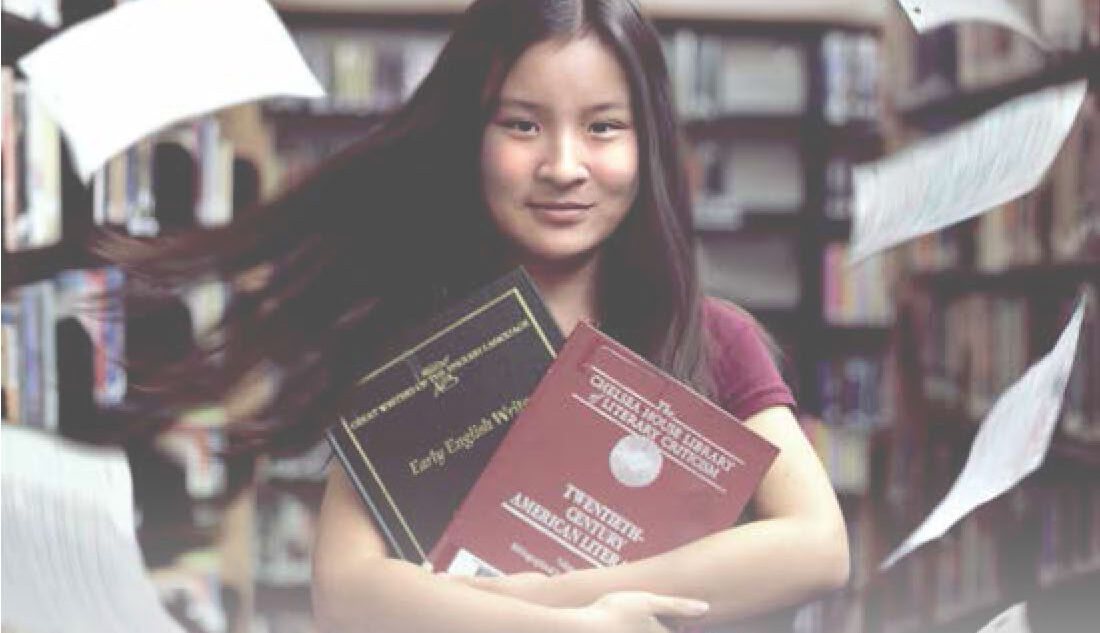
Students (and the rest of us) will encounter challenges and problems throughout our lives. Some of those will be challenges that we overcome in order to learn, grow…

On February 3, 2016, world class high school football players officially signed with the four year university that has successfully recruited them to come to play…