Many educators worry about student motivation, which typically declines as students grow up through middle school and high school. At the same time, they see the growing importance of friends and peer groups. A common conclusion is that negative peer influence is undermining student motivation and engagement.
Yet research on peers, teachers and student motivation paints a different, more complex picture. Some major conclusions from research include the following:
- Motivation does tend to decline as students move through middle school and high school.
- Peers do influence motivation and engagement, but that influence is most likely to be positive, not negative. This influence does not overwhelm other influences, such as teachers and parents.
- Peers are much more likely to learn from each other when they are intentionally taught skills and practices for helping each other and solving problems together.
- Teachers — who continue to have much greater influence on academic engagement than peers — play major roles in shaping peer relationships in ways that challenge students to learn and grow, rather than undermining learning.
The students in schools and classrooms may be an untapped resource to motivate and challenge each other to learn and grow. It’s easier to tap this resource when it is recognized as a resource, not a deficit, and when educators understand the multiple layers of peer relationships and influence. The good news is that teachers can play an important — if often hidden — role in encouraging positive peer support and challenge to be engaged in learning.
Five Key Findings on Peer Influence
Many people worry about the negative influence of peers on student motivation. However, research suggests that these fears may be misplaced or overstated, with negative attitudes being more often triggered by other individual, classroom and educational factors. Some key themes in the research include the following:
- Peers have a modest, but meaningful influence on academic motivation and achievement. Most research finds relatively small, though meaningful, effects of peers on each others’ academic motivation and learning — with teachers playing a much more significant role than peers — even throughout high school.
- Most often, peers are a positive academic influence. When peers do have an effect, it is most common that friends and classmates challenge each other to put in academic effort and to learn, rather than undermine learning. This finding is consistent across different racial-ethnic groups of students.
- Peer influence varies for different students. Peer influence is different for different students, depending on their individual personalities and strengths as well as their academic abilities. For example, students who struggle in school benefit the most from having relationships with students who excel in school. However, if high-achieving students have too many low-achieving friends, it can undermine their motivation.
- Students are more influential when they learn skills to help each other with learning, such as communication skills, effective group work, helping behaviors and how to explain problem solving (rather than just giving answers).
- Teachers and schools play a significant role in shaping peer influence. How classrooms are managed so that students feel safe and engaged and how schools create a safe climate and group students all influence how peers either support or undermine academic motivation and learning. For example, when teacher-student relationships are better, peer relationships tend to have more of a positive effect on learning.
Friends See Friends Doing Well in School
One indicator of positive peer influence in student motivation is whether students believe their friends do well in school. Recent Search Institute surveys of more than 120,000 students in grades 6 to 12 found that students believe most or all of their closest friends do well in school. Females are somewhat more likely than males to believe their closest friends do well in school. 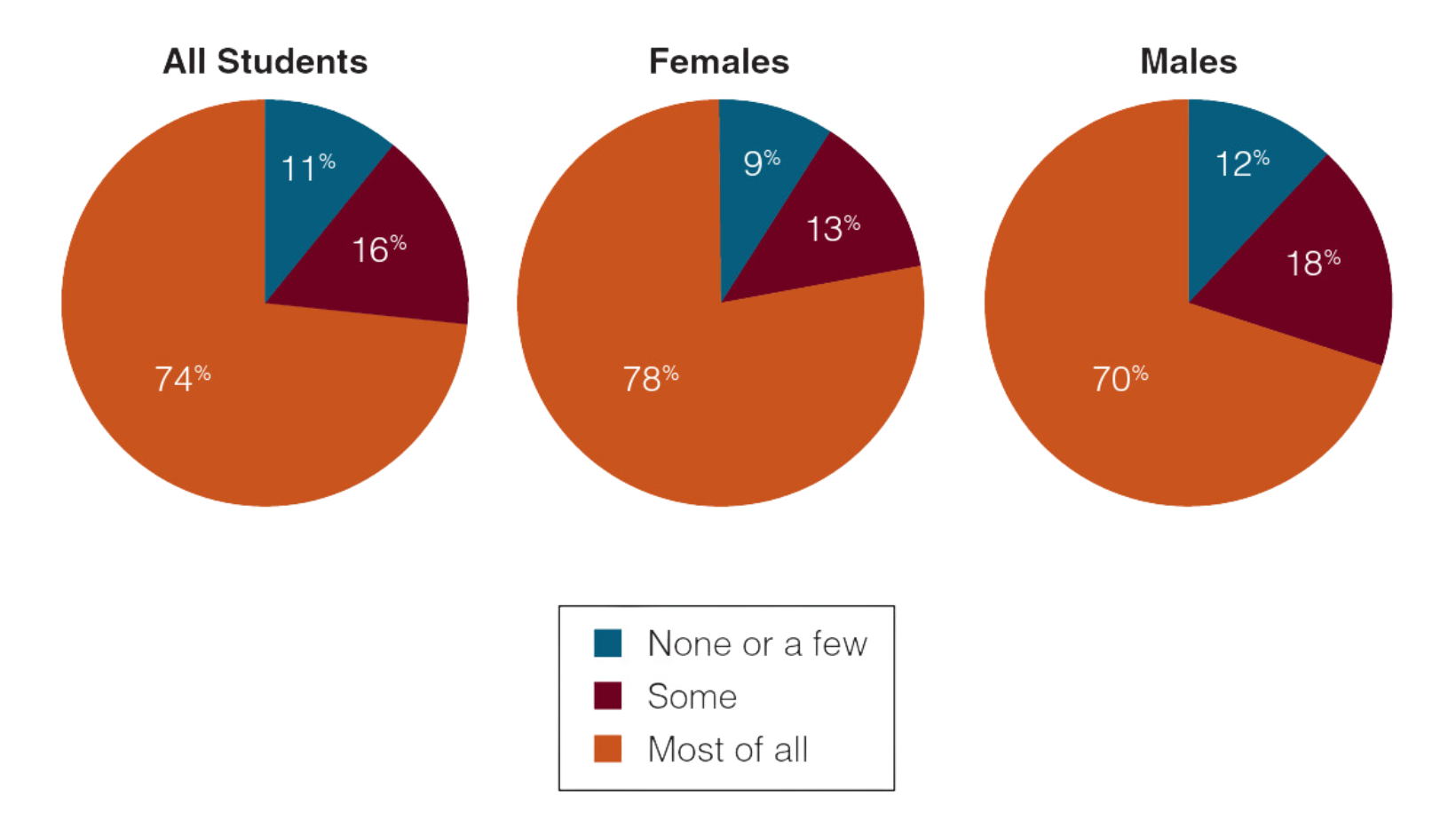
Different Peers Influence Motivation in Different Ways
Students obviously have different kinds of relationships with peers. These different types of relationships challenge students to learn and grow in different ways. Here are three types of relationships in order from greatest to least influence on motivation, school engagement and learning:
| Two-Way Friendships | Regular Interactions | Shared Group Membership |
|---|---|---|
| Friends who trust and are loyal to each other provide emotional support and encouragement that helps students when they’re struggling. Students also push themselves to meet their friends’ expectations, and they often develop habits and skills together. | Students interact with other students regularly, even if they may not be emotionally close. These relationships sometimes provide information students need to learn as well as influencing their beliefs and behaviors about themselves and about learning. | Groups provide a source of identity, resources and positive feelings of belonging and being liked. These more distant relationships have less impact, though they do influence how students see themselves and their status in the school. |
How Peer Relationships Affect Academic Motivation
For many students, peer relationships enhance both the effort they put into education and outcomes they achieve. When students feel supported by their peers, they are more likely to help others or cooperate with classmates. And when students are shown care from peers, they become more motivated to pursue social and academic goals. Students are more likely to develop an intrinsic desire to learn and a mastery orientation to learning when they:
- Believed they were valued and respected by other students;.
- Believed their best friends had positive attitudes toward learning; and
- Felt they belonged in the classroom with their peers.
In addition, when peer groups share positive expectations about school achievement, students become more intrinsically motivated, and their interest in and enjoyment of schoolwork increase. In this study of peer relationships in a middle school science class, each level of peer interaction — from positive oneto-one relationships to a broad sense of belonging — contributed independently to students’ motivation to learn. If, however, these peer interactions were negative (such as resistance to academic norms), students became less motivated.
Conditions that Enhance Positive Peer Influence
Students are most likely to be positive influences on each other’s academic motivation when the following four conditions are present:
- Students clearly communicate the shared expectation that they will all work toward and accomplish academic goals.
- Students provide each other with practical help, such as working together in study groups.
- Relationships between the peers are safe and mutually responsive.
- Students provide each other with emotional support. Although these are all interactions among students, teachers can play important roles in establishing a classroom culture and structure that encourage these conditions.
In the End, Teachers Matter More for Academics
Although peers influence students’ academic motivation and achievement, research consistently shows that teachers have a much greater effect on academics than peers throughout K–12 education.
For example, a study of 3,200 middle and high school students from the U.S., Canada, and the UK found that students’ perceptions of their relationships with teachers, parents and peers were all associated with academic engagement and goal setting.
When compared, perceived relationships with teachers were most strongly associated with academic goal setting and class participation, with peer relationships playing a role as well. Both peer and teacher relationships were associated with whether students enjoyed school. Relationships with parents played less of a role in these academic areas, though they were still significant.
Helping Students Learn to Challenge Each Other Academically
Teachers play important roles in creating classrooms that maximize positive peer influence for learning. Try these strategies to encourage students to push each other to learn and grow.
Notice students’ interactions
Notice students’ interactions with each other, including their social status with peers, how they are being treated and how they interact. These interactions will tell you a lot about how ready they are to work in groups. Use what you see and learn to shape group assignments and class discussions as well as your own relationships with students.
Set up classrooms to encourage positive peer interactions.
Arranging desks into pods instead of rows, for example, can facilitate discussion and shared problem solving.
Clearly communicate expectations
Clearly communicate expectations for social and academic interactions, including the standard that students encourage and help each other be their best. Set firm limits on inappropriate behavior, providing a clear articulation of the reasons behind these expectations. Set clear norms about supporting all students’ learning and growth, treating everyone with respect and kindness, resolving conflicts effectively, and focusing on the class’s academic and learning goals.
Emphasize mastery learning instead of performance-based goals
Emphasize mastery learning instead of performance-based goals that focus on comparisons among students. Class ranking and other strategies that pit students against each other may be motivating for some, but they undermine motivation (and relationships) for other students, particularly those who tend not to excel academically.
Focus the groups on understanding and using the underlying principles and procedures
Focus the groups on understanding and using the underlying principles and procedures for solving the assigned problems. Then give plenty of time for them to work together, using those tools to complete the assignment. This approach contrasts with spending a lot of time working as a whole class to come up with correct answers based on the teacher’s explanation of the procedure, leaving little time for the groups to work together (which can undermine the group learning process).
Coach students on how to learn together.
Once students internalize these strategies, they’ll use them again on their own. Examples include:
- Being explicit about steps in group learning processes, such as reading, recalling, listening and interpreting reading materials.
- Using prompts to guide giving feedback. For example, prompts such as, “Can you explain that?,” “Can you clarify what you mean?” or “What do you think about…” give structure to peer discussion and options for openly sharing ideas. Consider giving some examples of prompts on index cards for students to use until they are comfortable providing good feedback.
- Turning questions back to the group (instead of answering individual questions), insisting that students explain problems, not just give the answers, or reinforcing positive group learning behaviors.
Give students time to practice
Give students time to practice group skills before tackling challenging academic problems. It’s hard to give explanations to others when you’re still trying to understand the content yourself. Once students get comfortable with how to give explanations and help each other with more familiar material, they are prepared to take on harder assignments.
hold students accountable
Actively monitor group work to hold students accountable to the expectations and group norms (such as the importance of working together and ensuring that everyone contributes), not just the mechanics of the group work (such as signing each other’s work at the end of a group assignment). This includes watching carefully to ensure that all group members are involved and contributing.
Jostens partnered with Search Institute to provide research-based data and advice for dealing with common school challenges. Over the past 30 years, Search Institute has studied the strengths and difficulties in the lives of more than five million middle and high school youth across the country and around the world to understand what kids need in order to succeed. Like Jostens Renaissance, Search Institute focuses on young people’s strengths, rather than emphasizing their problems or deficiencies. Visit SearchInstitute.org to learn more.
Below you will find the full How Peers Can Push Each Other to Keep Getting Better guide. Click the button to download a PDF with class activities, statistics, research and references around creating a growth mindset in your students.
WANT TO USE JOSTENS RENAISSANCE?
If you are a Jostens customer and you need a login to access all the resources on JostensRenaissance.com, email your rep or click here.
If you don’t currently partner with Jostens for yearbooks or graduation regalia or other celebratory products, you can learn more here.
Many educators worry about student motivation, which typically declines as students grow up through middle school and high school. At the same time, they see the…

Sometimes we think of mentors narrowly as those who sign up through a formal mentorship program to spend time with a young person. In addition to…
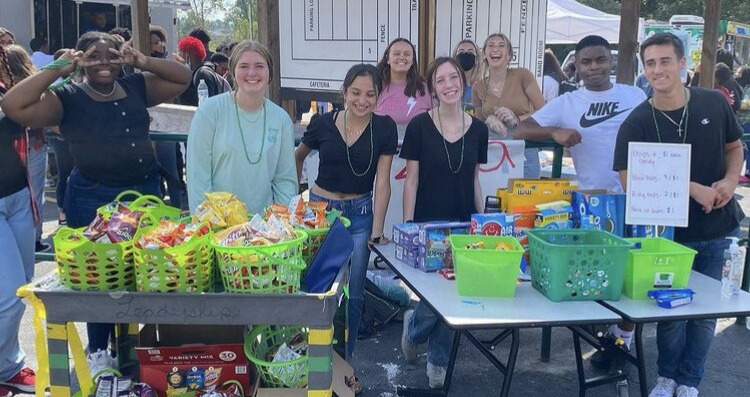
Recognize and reward students for their academic achievements, attendance, behavior or anything in between by inviting them to a Food Truck Rodeo – a coordinated special…
This month’s National Renaissance Student of the Month is Diamond Edwards-Ebere from Desert Ridge Academy in Indio, CA. Nominator Terresa Amidei writes (lightly edited): “Diamond is…
This month’s National Renaissance Staffulty of the Month is Roxane Winston at Centennial High School in Peoria, AZ. Their nominator wrote: “Roxane brings a burst of…