
Jostens Renaissance By the Numbers
A summary of reasearch papers evaluating the effectiveness of Jostens Renaissance in schools.
Maybe some kids never cared about the honor roll. Now they care and they strive for it. It’s a way to push kids to do the best they can do.
The above quote could have been spoken by a student in any of thousands of Jostens Renaissance schools across North America. But it was shared with doctoral student John McEwan as part of his research on the effectiveness of the Jostens Renaissance framework in 1992. Since Renaissance became a Jostens initiative in 1988, numerous studies have been completed to investigate the impact it has had on schools. This article summarizes the key findings of eleven formal research papers, the most recent from 2022, and all of them were peer-reviewed studies that met master’s and doctoral level academic requirements. Where appropriate, these findings are supported by including self-reported data from Renaissance schools that provided data as part of their formal application to be a Jostens Renaissance School of Distinction for the 2022-2023 school year. Together these studies and school success stories demonstrate the ways in which Jostens Renaissance has impacted students for over a generation.
Recognizing and Rewarding Students for 35 Years
Renaissance began as an educator-led philosophy in 1984, focused on creating a well-rounded student while celebrating academics, and became a Jostens-led initiative in 1988. Jostens now supports an entire department dedicated to working hand-in-hand with educators to develop resources, events, inspiration, ideas and guidance for schools. The face of Renaissance looks quite different now, with a website, regional and virtual events in addition to the annual Global Conference, and multiple communities on social media. However, the principles and key tenets remain the same, because they work.
One of the greatest strengths of Jostens Renaissance is that it’s a flexible framework that schools can adapt to meet their existing needs and goals, choosing the activities and traditions that resonate with their school community. Through the use of Jostens Renaissance, it is more likely that teachers love their job and students thrive in school.
Many anecdotal testimonials speak to the influence of Renaissance on school communities, but this article focuses on formal studies to provide real quantitative data and legitimate qualitative responses to carefully selected research questions. The data establishes, and the comments affirm, that study participants believed Renaissance was a major factor in measurable school-wide results. It should also be noted that these studies focused on schools that use Renaissance recognition systems and intentional strategies based on the Results Formula™. Thousands of other schools use Renaissance resources such as The Harbor™ video series for students and Green Room professional development episodes “a la carte” instead of as part of an intentional system of recognition, reward and reinforcement, and therefore would not be considered in a study like this.
Results: Improving Attendance
“[Renaissance] makes school more fun to attend.”
When students feel like their presence matters, both for themselves and their peers, they are more likely to want to come to school. Presence in the form of attendance is often one of the measurable requirements for receiving Renaissance recognition or attaining higher levels of rewards. Several activities on the Idea Exchange, such as Monthly Perfect Attendance and Attendance Madness, specifically recognize and reward students for attendance.
Researchers who looked at student attendance found that it improved when schools used Renaissance strategies. In one study, one of Dr. Phillip Campbell’s respondents reported that offering a “no-tardy party” as a reward resulted in higher attendance rates and fewer tardies, and Campbell’s school reached an all-time high attendance rate of 95.8% while using Renaissance.[3] Saneik Buchanan’s analysis of one school’s data identified a significant decrease in absences.[2] John F. McEwan’s study provided the most comprehensive evaluation of school attendance data before and after the implementation of Renaissance, and it showed a dramatic decrease in absences. The interview portion of his study affirmed that students, and especially parents, and teachers attributed this change largely to Renaissance.[9]
This research data is supported by self-reported measurements provided by schools who have applied for the Renaissance School of Distinction.
Attendance Data from Renaissance Schools, as Reported on the 2023 School of Distinction Application
SCHOOL NAME |
TIMEFRAME |
PERCENT INCREASE |
DETAILS |
|---|---|---|---|
| Kingman Academy Middle School | 2022-2023 | 9% | Incentives have helped bring attendance up from 67% to 76%. |
| Brazoswood High School | 2016-2023 | 6% | The attendance rate increased from 89% to 95%. |
| Greenbrier High School | 2022-2023 | 2% | This longtime Renaissance school saw a Covid attendance drop but credits their stepped-up rewards with a gain. |
| Del City High School | 2022-2023 | 2% | Improved student involvement boosted attendance. |
| Licking Valley High School | 2022-2023 | 1% | After a Covid drop, attendance rates have climbed again. |
On their 2023 School of Distinction application, Shelbyville Central High School credited their Renaissance Reward Card system with a significant change in behaviors related to attendance:
When students don’t qualify [for Renaissance], they become hyper-vigilant about going back, cleaning up misdocumented tardies and/or absences with the teachers and attendance office, retrieving documentation from doctor’s visits, and turning in notes they neglected. When all of this is done, it essentially cleans up our attendance numbers and helps our percentages.
The qualitative research results also confirm an impact on attendance. In Alanna Walen’s research on the impact of Renaissance rewards on student achievement, she asked students if Renaissance helped motivate the improvement or maintenance of attendance, and 47% of respondents agreed or agreed strongly, 27% were neutral, and 26% disagreed or disagreed strongly.[11] Interviewees in several of the studies [3, 10, 11] also shared that Renaissance helped their school improve attendance.
Results: Improving Academic Achievement
“[Renaissance] increased the awareness of the importance of achieving higher grades.”
Everyone from students to administrators is aware that grades and test scores are two of most important and monitored indicators of success for any school. By reinforcing the importance of academics, along with recognizing and rewarding students who meet GPA and grade improvement goals, schools give them a reason to do well with their studies. An important element of Renaissance systems is the encouragement of a growth mindset, to ensure all students feel able to participate; improvements (not just continued high performance) are recognized and rewarded, and positive peer pressure and talking about grades becomes the “norm” and “fashionable”.[8,9]
Several of the original Renaissance activities are still key drivers of this impact: Renaissance Rallies or other special events, where students who meet academic guidelines have a fun experience that reinforces academic growth; Renaissance Cards, where students earn tiered and motivating rewards for meeting specified criteria; and visible, tangible forms of recognition such as Painted Parking Spots that become coveted traditions that students are willing to work hard for.
Numerous studies found both measurable improvements in data and reported strong connections between the implementation of Renaissance and increased academic achievement in several ways of evaluating success:
IMPROVED GRADES: In his Masters thesis, Henry Kobik found that 27.8% of surveyed students reported improved grades due to their desire to earn the rewards and recognition. Those reporting improved grades were asked about motivating factors, and 39.3% said the rewards motivated them, while 48.8% liked the chance for recognition.8 English and Buchanan found significant GPA increases after implementation, and 62% of Walen’s surveyed students stated that Renaissance helped motivate them to raise or maintain their grades.[6,2,11] In McEwan’s study, a student commented on how their school’s focus on using Renaissance to encourage academic success impacted their culture:
There’s a better relationship between the teachers and students. In fact, the teachers realize that the kids care. More kids care now about how they do; more so than when they were freshmen. Teachers respect us and realize we’re trying to do better.9
ACADEMIC TESTS: In her dissertation focused on perceptions of school climate and student achievement in Renaissance schools, Amy Yarborough Coyne found a statistically significant difference in test scores in several schools within three years of implementing Renaissance.[5] Two of the schools English studied reported significant growth in test scores and were upgraded from low-performing to US News bronze and silver medal schools. One of them saw ACT composite scores increase from 18.2 to 20.4 after using Renaissance for four years.[6]
PASSING CLASSES: One of the schools in Campbell’s study reported the percentage of students failing at least one class fell from 29% to 4% in two years.3 All of Nowak’s respondents agreed that failure rates had decreased due to students’ efforts to maintain Renaissance status.[10]
HONOR ROLL/NATIONAL HONOR SOCIETY STATUS: McEwan noted a 38.2% increase in students achieving honor roll status or better during the second year of implementation.9 Nowak’s respondents all agreed that Renaissance had helped increase membership in the NHS by motivating prospective members to work harder.[10]
McEwan’s classic study provided the clearest numerical picture of the impact on academic achievement, both due to the four-year span that included the start of the program, and the inclusion of both grades and honors participation.9 Schools using Jostens Renaissance continue to experience similar results, as the following charts demonstrate.
Achievement Data Before and After the Introduction of the Renaissance Program in McEwan’s Study
SCHOOL YEAR |
ALL A’S |
HONORS |
TOTAL |
PERCENT OF TOTAL STUDENTS |
YEARLY PERCENT CHANGE |
|---|---|---|---|---|---|
| 1987-1988 | 62 | 826 | 888 | 12.5% | + 6.8% |
| 1988-1989 | 59 | 818 | 877 | 12.8% | + 2.4% |
| 1989-1990 | 66 | 854 | 920 | 14.4% | + 12.5% |
| 1990-1991 | 71 | 1053 | 1124 | 19.9% | + 38.2% |
Schools using Renaissance continue to see these kinds of results. Click here to see the most recently reported data.
Academic Achievement Data from Renaissance Schools, as Reported on the 2023 School of Distinction Application.
SCHOOL NAME |
TIMEFRAME |
PERCENT INCREASE |
CATEGORY |
DETAILS |
|---|---|---|---|---|
| Horizon Middle School | 2022-2023 | + 34% | GPA 3.5+ | Motivation to attend the NIght of the STars event by having 3.5+ GPA and no office referrals led to a 34% increase in qualifying students between SY2022 and SY2023. |
| Clear Creek High School | 2022-2023 | + 17% | GPA | Working for a GPA-related reward card contributed to 17% of students increasing their GPAs between first and third quarter. |
| La Quinta Middle School | 2022-2023 | + 5% | A’s | The ability to earn Renaissance Reward Cards and a t-shirt for reaching 4.0 led to a 5% increase in A’s. |
| La Quinta Middle School | 2022-2023 | – 9% | D’s and F’s | Wanting to be recognized at rallies and qualify for a Reward Day reeduced the number of D’s and F’s from 32% to 21%. |
Result: Reducing Disciplinary Actions
“I’m finding that in the course of the last two years the number of kids that have been elimated from my classroom due to discipline problems has really signifcantly decreased.”
Renaissance is rooted in creating strong relationships between all parties in a school. Those relationships, in combination with formal Renaissance reward programs such as Renaissance Cards, give students a reason to avoid discipline. Renaissance cards and other systems typically include behavioral requirements, like having one or fewer discipline infractions in order to qualify for rewards or activities.
The data from numerous studies supports the notion that using Jostens Renaissance leads to fewer disciplinary actions.[2,3,4] In one school 6, 105 student suspensions were reported before Renaissance, compared to 41 suspensions after implementation. In his doctoral thesis, Gregory English also noted that one school had 2,000 discipline referrals the year before Renaissance, and had 545 referrals five years later.[6]
In his dissertation evaluating Jostens Renaissance outcomes, Gregory Harrison looked at disciplinary actions for 9th graders and found significant reductions in the number of office referrals, out-of-school suspensions, and expulsions during the years Renaissance was gaining traction.7

Total Frequency Data for 9th Grade Discipline Assignment in Harrison’s Study
SCHOOL YEAR |
ISS |
OSS |
Referrals |
Expulsion |
|---|---|---|---|---|
| 2005-2006 | 1523 | 602 | 6063 | 63 |
| 2006-2007 | 1729 | 838 | 6120 | 67 |
| 2007-2008 | 2159 | 768 | 4142 | 35 |
| 2008-2009 | 1949 | 538 | 4318 | 18 |
The qualitative reflections from the research also confirm that motivation to receive Renaissance rewards led to fewer disciplinary incidents. English interviewed one principal who had a high number of fights and incidents of teacher disrespect before 2013 when Renaissance started, and said that as of 2017 these types of incidents “almost never occur.”[6] Christopher Nowak and Kobik also were told by respondents that Renaissance cards motivate students to avoid altercations and behave positively in order to receive the benefits of participation.[10,8]
Schools using Renaissance strategies reported improvements in several discipline-related areas.
Discipline Rate Data From Renaissance Schools, as Reported on the 2023 School of Distinction Application
SCHOOL NAME |
TIMEFRAME |
PERCENT INCREASE |
CATEGORY |
DETAILS |
|---|---|---|---|---|
| Clear Creek Middle School | 2022-2023 | – 53% | Discipline referrals | Since implementing Renaissance, referrals dropped from 76 in the fall of SY22 to 35 in the fall of SY23. |
| Lucille Umbarger Elementary | 2022-2023 | – 51% | Discipline referrals | Intentionally using Renaissance strategies to build relationships and trust in the community has reduced the daily rate of office referrals from 20.11 to 9.84. |
| Kingman Academy Middle School | 2022-2023 | – 32% | Suspensions | Use of The Harbor by Jostens videos during specified class periods, in addition to giving students ownership of school culture helped lead to a reduction from 28 to 19 incidents resulting in suspension. |
| Pascagoula High School | 2022-2023 | – 8% | Discipline referrals | Rewards fro students having no infractions and stronger relationships with teacher have contributed a drop in the percentage of students with an incident drop from 30.5% to 21.9%. |
An inviting and positive school culture can do wonders for students showing up on time. If they WANT to be there, they will be there, so Renaissance helps us make it place that the students WANT to be.
– Marshall County High School, School of Distinction Application
Result: Increasing Graduation Rates
“[Jostens Renaissance] encourages and applauds all levels of positive perforamnce… I believe this can influence students so that they don’t give up on school.”
It’s fair to say that students are aware that graduating from high school is important. But in the cacophony of daily life, the benefits of graduation can feel less tangible than other, more immediate temptations. Renaissance activities keep students thinking about grades, but they also offer a number of ways to reinforce the importance of getting across the finish line. The most direct are the Commitment to Graduate® activities and messages that visibly and regularly remind students of the benefits of hard work and graduating with their class.
Several studies found a strong connection between measurable improvements in graduation rates and the use of Jostens Renaissance. The following table summarizes the specific data available.
STUDY |
GRADUATION RATE BEFORE IMPLEMENTATION |
GRADUATION RATE AFTER IMPLEMENTATION |
INCREASE (%) |
|---|---|---|---|
| Campbell’s School [3] | 81.5 | 92.1 | 13% |
| English [6] – School A | 82.8 | 95.2 | 14.9% |
| English [6] – School B | 75.3 | 93.8 | 24.5% |
| English [6] – School C | 89.5 | 98 | 9.4% |
In addition to the graduation rate data above, McEwan looked at dropout rates and found that they declined dramatically during the first few years of Renaissance — by 20% the first year, 56% the second year, and 7% the third year.9 Harrison used retention rates to show there were significantly higher retentions since implementation.7
Campbell’s respondents gave Renaissance a lot of credit for their schools’ graduation rates, particularly because students wouldn’t qualify for the rewards if they exceeded a small number of absences, and also that relationships with adults who care about their success helped get them to graduation:
Several [Renaissance] award-winners mentioned that students developed a greater sense of self-worth and developed hope for their futures due to the practices and beliefs implemented under the Jostens Renaissance program.3
Result: Strengthening Teacher Morale
“I absolutely love being here and I attribute that to the Renaissance program. The change that I have seen is you can feel the positivity in this building. You feel important. You feel valued.”
Another foundation of Jostens Renaissance is the concept of recognizing and rewarding teachers, staff, and even administrators in addition to students. It’s likely that teachers who don’t feel valued and respected put energy into valuing and motivating their students. Teacher retention is a challenge in most districts, and a positive culture can be a key factor in convincing teachers to accept a job and stay at a school. JostensRenaissance.com has a landing page with ideas on educator morale and retention, and an entire section of the Idea Exchange is dedicated to Staffulty recognition ideas.
Bollinger’s research paid special attention to the impact on educators.1

QUESTION |
EXTREMELY OR VERY EFFECTIVE |
NOT SO EFFECTIVE, NOT AT ALL EFFECTIVE OR ABSTAIN |
|---|---|---|
| Please rate the effectiveness of Jostens Renaissance on teacher morale. | 70% | 30% |
| My leader conveys respect by acknowledging my successes more than before my school started Jostens Renaissance. | 74% | 26% |
| Leaders at my school model desired behavior more now than they did before Jostens Renaissance was put in place. | 70% | 30% |
| I have stronger relationships with my coworkers today than I did a year ago. | 78% | 22% |
Bollinger also asked participants how they had changed professionally since the implementation of Jostens Renaissance. One described leaving a different school due to a poor culture:
It was very toxic. Where I am now, I am happier. I absolutely love being here and I attribute that to the Renaissance program. The change that I have seen is you can feel the positivity in this building. You feel important. You feel valued.[1]
The connection between faculty morale and student success was made in several studies. Coyne’s interviewees stated that positive climates and relationships are key to motivating both faculty and students.[5] A respondent explained to English how the focus on supporting teachers impacts students as well:
…It’s building those relationships and fostering those relationships, you know, that [our principal] focuses on. The academic success has gone up because…he has held the teachers accountable, and by putting the Renaissance program and the Rs in there and saying, ‘this is what we stand for, this is what we’re going to do. This is a non-negotiable.’ He’s made all the teachers better teachers.[6]
Anecdotal evidence provided as part of School of Distinction applications also indicates an impact on educator morale.
Our monthly tireless staff award (the winner is selected by the students on our Renaissance team) has really brought our staff together and created a culture of wanting to recognize others for the hard work they are doing.
– Kennebecasis Valley High School, School of Distinction Application
Result: Improving School Culture and Climate
“We have experienced a culture and climate revolution.”
The terms “school culture” and “school climate” are often used together, but it’s important to distinguish between the two in order to get the full picture. School culture refers to the elements that make up the identity of a school, such as routines, norms, and traditions — “the way we do things here.” School climate refers to the way a school feels emotionally.
For example: part of American culture is Thanksgiving. Most families share in a tradition each year that comes with a set of relatively standard routines. That said, the climate can vary from family to family. In some families, the climate is formal, in others playful, and in some it can be toxic. The two are interconnected; climate (i.e., how a community feels) impacts participation in traditions, and culture (i.e., traditions and norms) impact how a place feels. Both climate and culture are needed to make school a place where students and Staffulty want to be.
Jostens Renaissance contributes to both culture and climate. Specifically, traditions such as Renaissance Rallies, Renaissance Cards, and Honorary Diplomas directly convey the school’s values and define “the way things are done.” The climate of a Renaissance school just feels different: Staffulty and students generally treat each other with appreciation and respect; pride and a sense of community are evident in visible ways throughout the campus; and meetings feel like celebrations.
Improvements in culture and climate are harder to measure than grades and graduation rates, so this category relies heavily on Staffulty and student perceptions. All the researchers in this summary had findings that led them to describe Renaissance as positively impacting the schools studied. A few examples looking at different angles of school culture include:
STUDENTS ENJOYING SCHOOL MORE: Walen asked students if Renaissance helped students enjoy school more, and 73% agreed/agreed strongly, 25% were neutral, and 2% disagreed/disagreed strongly.[11] Likewise, 52% of teachers and 53.5% of parents in McEwan’s study felt that students enjoyed school more because of Renaissance.[9] Coyne’s respondents noted that students appear more motivated to come to school, and more positive relationships can be seen between all groups.[5]
SCHOOL SPIRIT: McEwan asked if there was increased school spirit because of Renaissance, and 68.1% of teachers and 62.8% of parents agreed that there was.9 Bollinger asked teachers at Renaissance schools to agree/disagree with: “My school reinforces values through tradition,” and 95% agreed or strongly agreed.[1]
PARTICIPATION IN EXTRACURRICULAR ACTIVITIES: Several of the 2023 School of Distinction applicants felt that Renaissance was a key factor in increased participation by students between 2022 and 2023. Stafford High School saw a 4% increase for athletic and competitive teams and a 3% increase in club participation. Henderson North Middle saw a 5% increase in student body participation in formal extracurricular activities. Oak Grove High School had 10% of the student body attending formal activities and offered to put on a spring carnival if at least 40% of the student body attended at least one activity, and they met that goal in 2023.
RENAISSANCE’S OVERALL IMPACT ON SCHOOL CULTURE: Bollinger asked teachers how effective their school’s involvement in Jostens Renaissance had been on improving culture. 96% said extremely or very effective.[1] Looking at Renaissance activity in a middle school for her dissertation, Michelle CarneyRay-Yoder asked all populations if they agreed with the claim that Renaissance “increases the positive school culture and increases morale for students and staff” and all 41 case study participants agreed.[4] Campbell’s respondents described Renaissance as the glue that hold their school together, an umbrella under which the rest of their school operates, and the catalyst for recognition and reward within their schools.[3] Coyne’s “interviewees linked positive climates and relationships to more productivity, more achievement, and more overall effectiveness in schools.” Coyne also asked interviewees if they saw a change in school climate since Renaissance started, and all answered “yes,” with one saying, “Absolutely. It permeated the entire school.”[5]
Conclusion
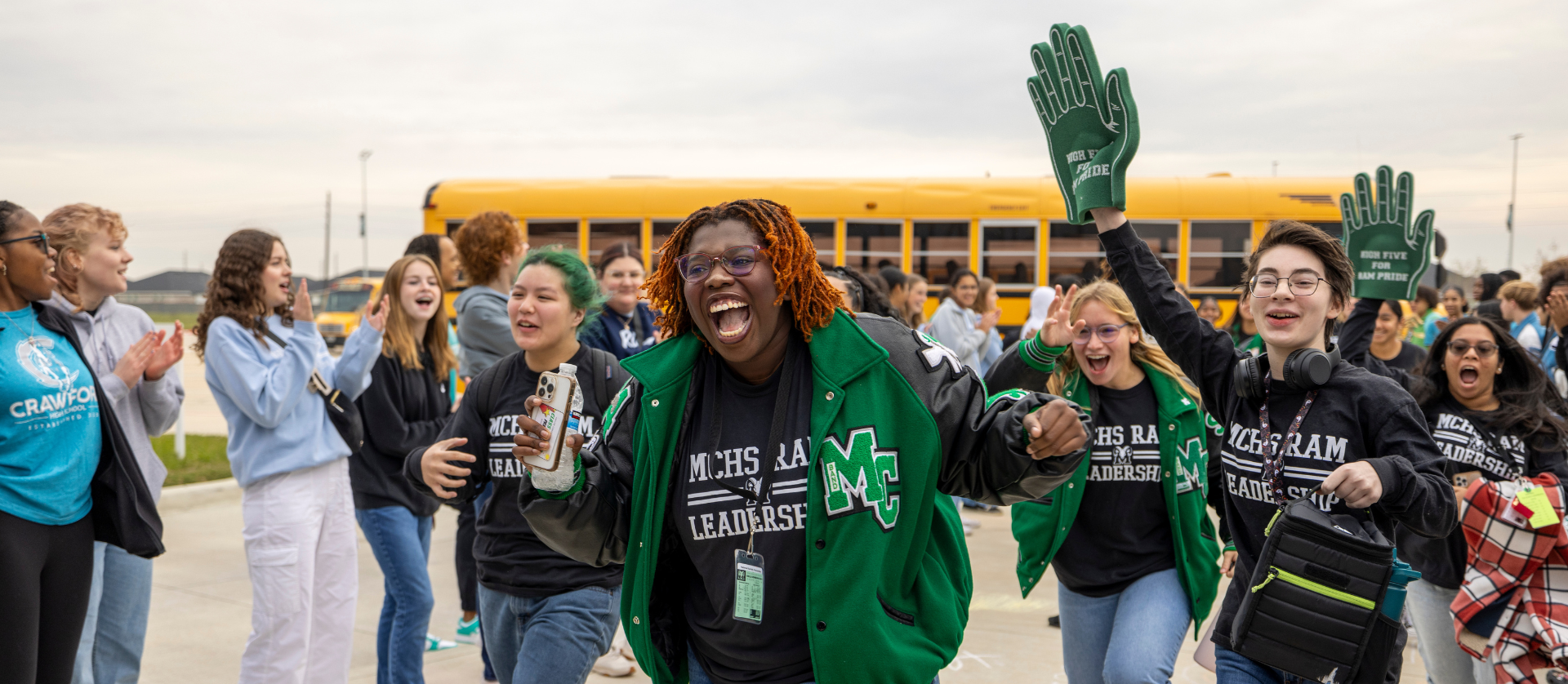
The Jostens Renaissance framework significantly impacts schools in six key areas, as demonstrated by formal research papers and supported by self-reported metrics. These results show that Jostens Renaissance is an effective, comprehensive approach to improving school culture and boosting student achievement by:
- IMPROVING ATTENDANCE:
Through its emphasis on recognizing and rewarding good attendance, students are encouraged to be more consistent in their school attendance, which in turn supports better academic outcomes. - IMPROVING ACADEMIC ACHIEVEMENT:
By recognizing and rewarding academic excellence, Jostens Renaissance motivates students to strive for better performance. Schools that these strategies saw measurable results in improved grades, higher standardized test scores, honor roll and National Honor Society status, and increased passing rates. - REDUCING DISCIPLINARY ACTIONS:
Through its emphasis on recognizing and rewarding good attendance, students are encouraged to be more consistent in their school attendance, which in turn supports better academic outcome - INCREASING GRADUATION RATES:
Through its emphasis on recognizing and rewarding good attendance, students are encouraged to be more consistent in their school attendance, which in turn supports better academic outcome - STRENGTHENING TEACHER MORALE:
Through its emphasis on recognizing and rewarding good attendance, students are encouraged to be more consistent in their school attendance, which in turn supports better academic outcome - IMPROVING SCHOOL CULTURE AND CLIMATE:
Through its emphasis on recognizing and rewarding good attendance, students are encouraged to be more consistent in their school attendance, which in turn supports better academic outcome
In addition to the peer-reviewed research outlined above, the JostensRenaissance.com website includes selfreported school data and success stories, in addition to personal statements that paint a full picture of the impact the Renaissance framework can have on educators and students. It’s difficult to measure the value of a relationship, but several studies3 and 11 in particular found that positive relationships are the key to all aspects of Renaissance, and make the recognition and rewards more meaningful.
SOURCES
JostensRenaissance.com offers many articles, videos, quotes, and digital resources, and some links in this document lead to this site. However, this article is narrowly focused on data, testimonials, and conclusions provided by eleven educators who wrote peer-reviewed papers to fulfill masters or doctoral degree requirements at various universities. These papers are linked below.
[1] Bollinger, K. E. (2022) Teachers’ Perspectives on the Effectiveness of Jostens Renaissance School Culture Improvement Program. (Doctoral Dissertation)
[2] Buchanan, S. (2020) The Evaluation of the Jostens Renaissance Incentive Program and the Impact it has on Students at a Southwest Florida High School. (Doctoral Dissertation)
[3] Campbell, P. (2016) An Evaluation of the Jostens Renaissance Program on Award-Winning High Schools’ Attendance Rates and Graduation Rates. (Doctoral Dissertation)
[4] Carney-Ray, M. C. (2013). The Impact of the Jostens Renaissance Program on Overall Achievement in a New Jersey Middle School. (Doctoral Dissertation).
[5] Coyne, A.Y. (2012). The Relationship Between Perceptions of School Climate and Student Achievement in Schools That Use Jostens Renaissance Programs. (Doctoral Dissertation).
[6] English, G. G. (2019) The Change Process and the Implementation of High School Jostens Renaissance Programs: A Multiple Case Study. (Doctoral Dissertation)
[7] Harrison, G.B. (2010). Evaluating Outcomes of the Jostens Renaissance Program at a Suburban High School. (Doctoral Dissertation)
[8] Kobik, H. (2000). The Renaissance Concept and the Effect of Positive Reinforcement on Student Performance. (Master’s Thesis)
[9] McEwan, J. F. (1992) Combating Declining Attendance and Achievement Rates Through an Incentives-Based Approach: An Evaluation of the Renaissance Program. (Doctoral Dissertation)
[10] Nowak, C. (2004). A Study of the Renaissance Program in a High School. (Master’s Thesis)
[11] Walen, A. (2012) How Do Students Describe the Effects of the Jostens Renaissance Rewards and Recognition Program on Their Academic Experience? (Master’s Capstone)
Self-reported data was submitted by schools as part of their application to be recognized as a Jostens Renaissance School of Distinction for school year 2022-2023. Contact Renaissance@jostens.com with any questions about this data.